


Welcome to Against the Cork, where I geek out about unusual wines!
As a Wine Buyer for an independent store with a large selection, I already have the opportunity to taste (and spit) hundreds, even thousands of wines per year in the course of my work. But the sales reps can’t bring everything in their portfolios for me to sample, nor is there enough time to taste everything. Some of my favorite finds happen when I shop at other wine stores. My wine friends are all too happy to recommend nerdy bottles to me that folks outside the industry might not appreciate. Other times, I rely upon the magic of serendipitous discovery, much like finding an unfamiliar title in a bookstore.
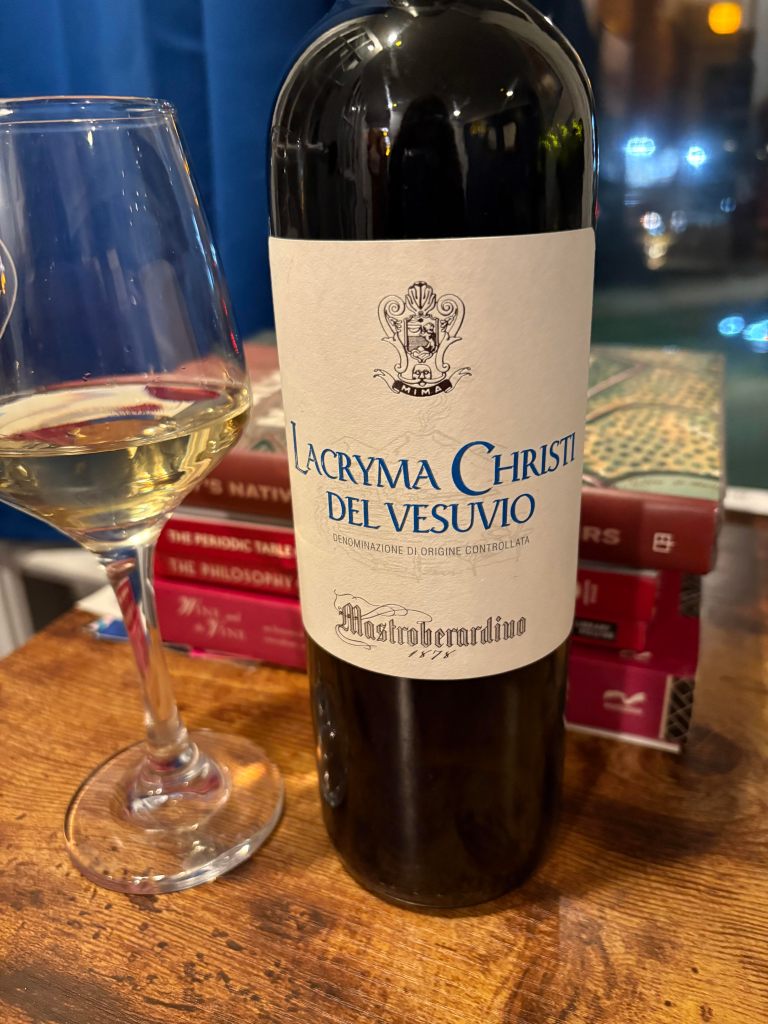
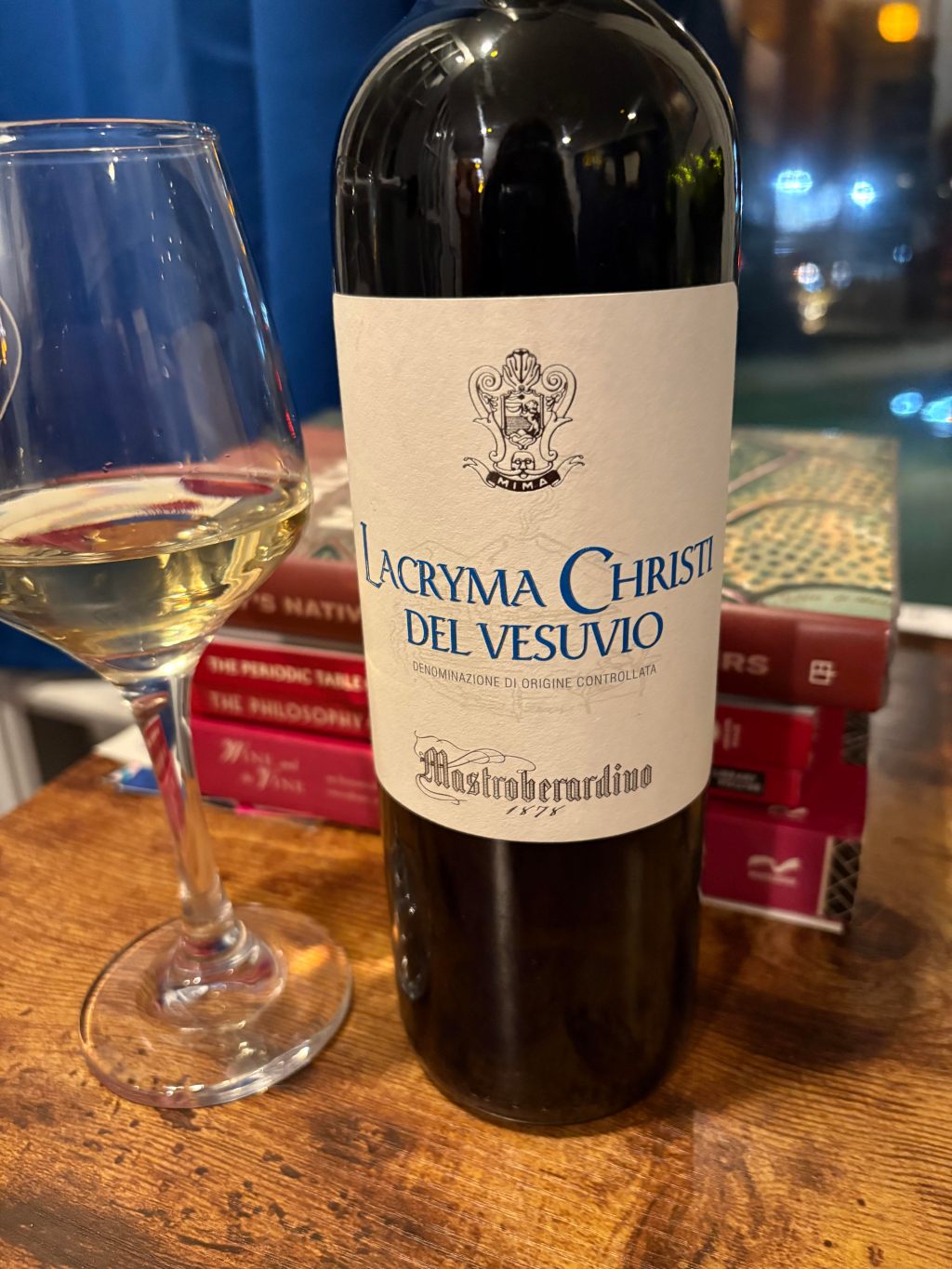
One of my most recent discoveries was Mastroberardino’s Lacryma Christi del Vesuvio Bianco (2023), a white wine from the slopes of Mt. Vesuvius. Yes, that Mt Vesuvius, as in Pompeii. If there’s anything to know about growing wine on an active volcano, it’s that danger = delicious. Further south in Italy, Sicily’s Mt. Etna currently produces some of the trendiest wines on the market. Sure, you never know when you’ll get blown to smithereens as a winemaker, but the juice is good and so is the money.
Lacryma Christi del Vesuvio, or “Tears of Christ of Vesuvius,” gets its name from legend, but there’s no consensus which story is correct.1 Maybe the landscape was indescribably beautiful, so Jesus wept. Maybe Satan’s rebellion was so painful, Jesus shed tears on the slopes of Vesuvius. Nobody knows for sure, but the tears blessed the land for winemaking. Anywhere with phylloxera-repellent soil is surely blessed.
Lacryma Christi DOC is made from the native grapes of Mt. Vesuvius, where viticultural history traces back to the 5th century B.C.E. and the arrival of vine-bearing Greeks. I once heard someone say that Lacryma Christi is the closest you can get to drinking Ancient Roman wine. There are both white and red versions; the red is typically made from Piedirosso and Aglianico (plus other minor contributors) and is great with pizza. Whites can be made from Coda di Volpe, Caprettone, Falanghina, and other local varieties.
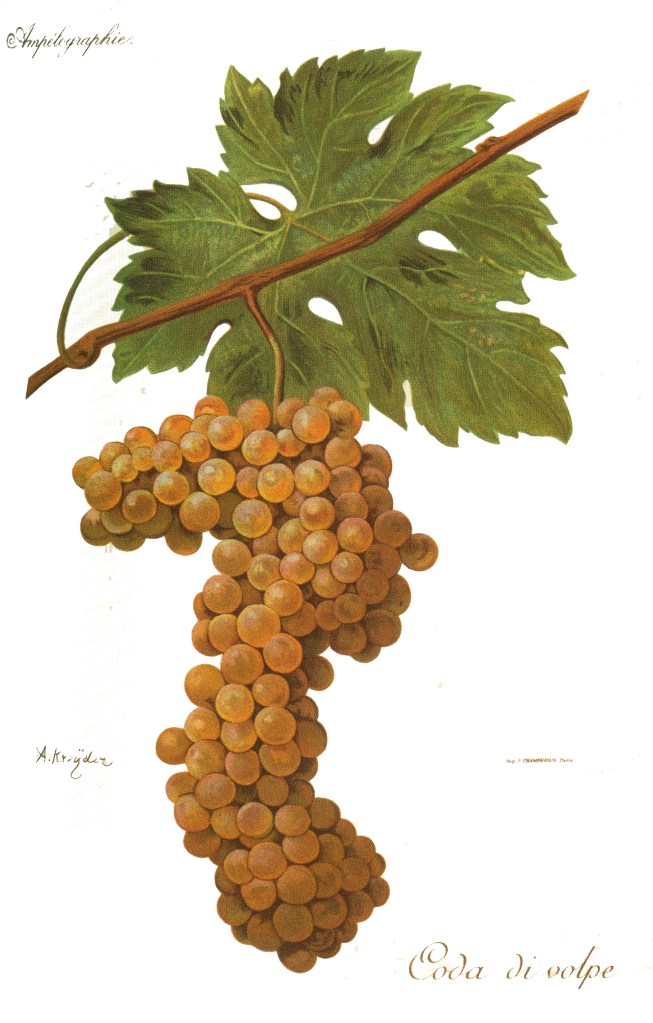
Various sources describe this particular wine as either 100% Coda di Volpe or 100% Caprettone. Mastroberardino itself describes2 their white Lacryma Christi as “Caprettone (o Coda di volpe del Vesuvio) 100%,” which isn’t super helpful when it turns out not everybody realizes they’re two different grapes despite DNA evidence. That said, because Coda di Volpe clusters have a distinct “foxtail” shape, there’s no reason Coda di Volpe and Caprettone should be confused for each other unless there’s a field blend situation where both varieties are growing together and nobody knows how much of either is in the vineyard.
Mastroberardino’s 2023 Lacryma Christi Bianco is medium-bodied, lightly golden, and quietly complex, with ripe green and stone fruit—honeydew, apricot, peach—backed by fennel, licorice, and a salty edge that feels unmistakably Vesuvian. It tastes like fruit grown under pressure.
For under $25, this is an excellent volcanic wine made in a place where “occupational hazard” includes lava. Drink it, enjoy it, and show it a little respect.
 Against the Cork
Leave a comment