


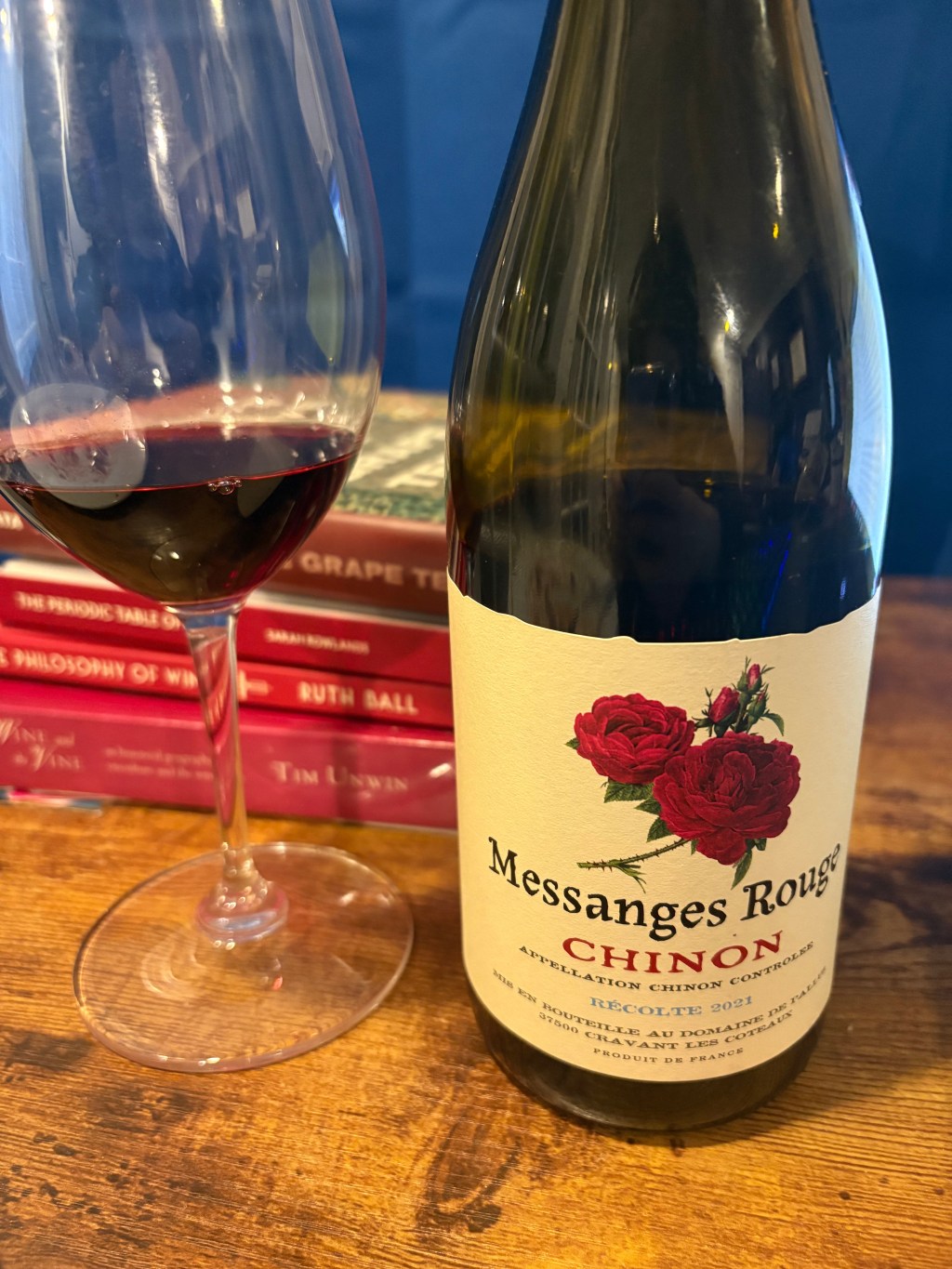
The other night, I opened a bottle of Chinon I fully expected to love…and briefly wondered if I’d made a mistake. A bit of backstory: I’m revising for my Certified Specialist of Wine exam, and classes have just started. For the first course block, the suggested wine style is Cabernet Franc from Chinon, a subregion of France’s Loire Valley.
For those of you unfamiliar with Cabernet Franc, it’s the daddy grape of Cabernet Sauvignon (Sauvignon Blanc is the mommy). It’s older and wilder. It’s a common Bordeaux-blending grape, especially on the region’s Right Bank where it gets with Merlot. Where it absolutely shines is a bit further north along the Loire River, where it’s often where it’s often bottled on its own and produces stunningly aromatic, spicy styles. If you’re ever confused by sommeliers discussing terroir nuances in wine, go and taste some Loire Valley Cab Franc. Bourgueil always struck me as being a little smoky, while Chinon sometimes smells like a rosebush. Saumur-Champigny? Whole other style.
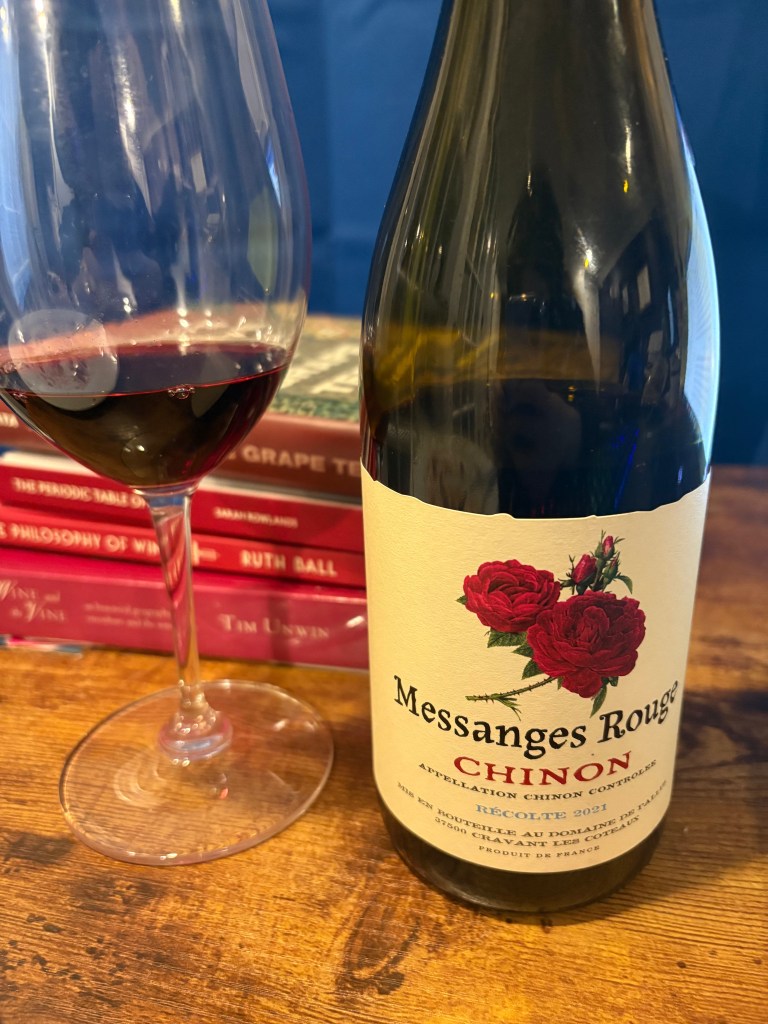
Speaking of rosebushes, Domaine de Pallus makes a wine called “Messanges Rouge” with roses on the label. Yes, it’s a Chinon, and it’s the wine I opened for my course. I’d wanted to source a Bernard Baudry, but the Messanges Rouge was a 2021 that was in my cellar for 2 years. So, I figured why not? This was to be my Module 1 wine.
Do you ever try a wine you think you’re going to love and it just doesn’t do it for you? That almost happened to me with this wine, but if ever there’s proof that sometimes you need to let wine breathe – here it is. When I initially opened it, I noticed its balanced body and acidity, but aromas and flavors were subdued. Cabernet Franc is known for pyrazines (chemical compounds in Bordeaux grapes that create herbaceous and peppery tones, especially in cooler climates); where I might expect red or white pepper, rosemary, and rose petals, I got very little of that at first. Upon first taste, it seemed like it would appeal more to folks who wouldn’t normally drink Loire Valley Cab Franc because it came across a little too clean.
Where I went wrong:
- I committed the classic wine sin: judging it five minutes after pulling the cork. Wine changes once it’s been exposed to oxygen, ideally developing intriguing (delicious) nuances for a couple days.
- Consumed it when it was too cold. While it’s generally recommended to chill Loire Valley Cab Franc, colder wine shows fewer aromatics than warmer wine. I kept it in my basement, which normally keeps to around 55F year-round; I didn’t account for the snowstorm chilling the house further.
You’d think that after all these years in the wine industry, I wouldn’t still need wine to teach me this lesson—but here we are.
An hour after opening, and a day after opening, the now-room temperature wine bloomed. This was the Chinon I fell in love with in the first place: raspberry, plum, pomegranate, blueberry; spicy, herbal, and earthy tones of white pepper, rosemary/dried herbs, graphite, and rose petal perfume. The tannins were silky, as expected for Chinon. What my husband initially described as “the wine of all time” became a joyful expression of an ultimate sommelier favorite.
But before we go, more about the wine!
Domaine de Pallus1 produces Messanges Rouge to spotlight their younger vines, which will produce less flavor concentration than their prized old vines but still make great wine. Messanges is an entry-level bottling, a way for wine drinkers to experience the Pallus house style without breaking the bank. It’s mostly aged in concrete with a bit of Burgundian oak. The wine is biodynamically farmed, basically meaning the winemaker practices organic farming on steroids, lunar calendars and all. And for one final, fun tidbit: Messanges is a very old Loire Valley name for Cabernet Franc!
TLDR: I was impatient and cold. The wine wasn’t. Go try Cabernet Franc from Chinon.


 Against the Cork
Leave a reply to Elizabeth Juengling Roth Cancel reply